SWLA Massingham Heath April 2026 Visit
The final residency of our year of documenting the heath and wider farmland habitats took place from April 20th – 25th on the Little Massingham Estate. Once again, we were generously hosted by owner Olly Birkbeck in newly available holiday accommodation which we had the privilege of giving a test run. Most artists were resident but a few made day trips and so we welcomed a total of 14 over the course of the week, including a visit from Andrew Haslen, accompanying Amie on Monday. The weather was kind to us and the only price to be paid for almost wall-to-wall sunshine was a chilly wind on several days. We were also fortunate with our timing regarding spring migrants passing through and having so many eyes on the ground meant that some good records were made and duly documented in sketchbooks and paintings. Nick Acheson who has now written most of the text for the project book joined us on three days, keen to see the artists at work, talk with them and share in the wonders of the heath once more.
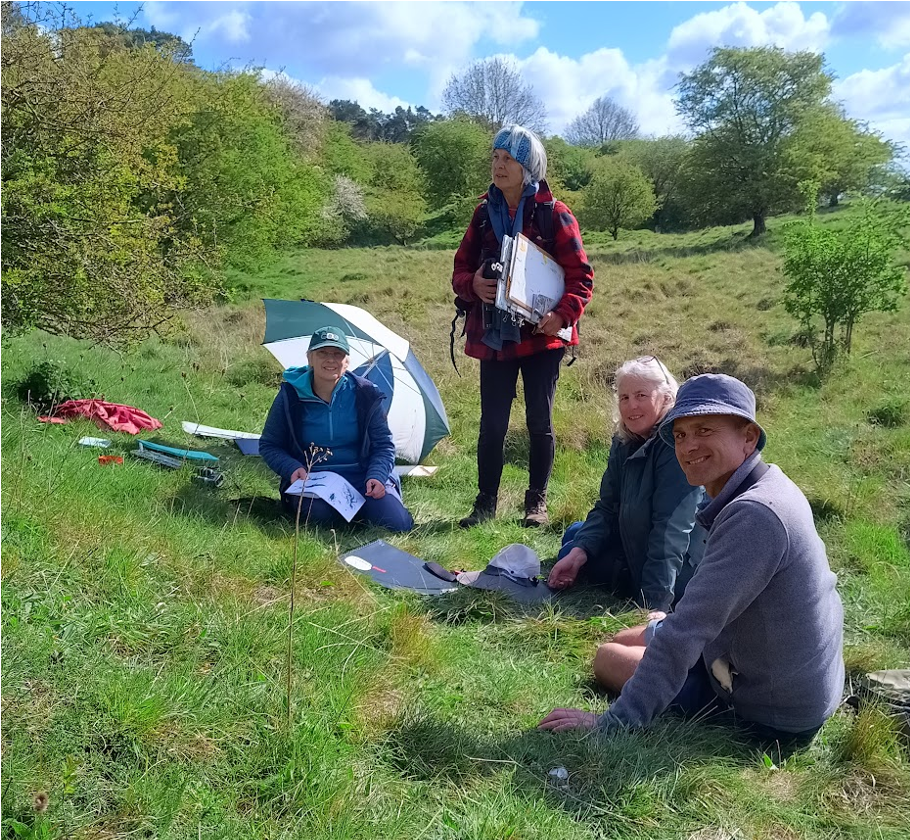
The week began with us being welcomed back by Olly, a briefing from Harriet and a slot for Martin Scaiff to introduce the concept of artists carrying programmable microphones with them to add an aural element to their work when appropriate. Martin has been commissioned by Norwich Castle Museum to produce an immersive soundscape of the heath to be included in a major exhibition Art and Nature planned for next year that will feature a selection of the Massingham Heath artworks.
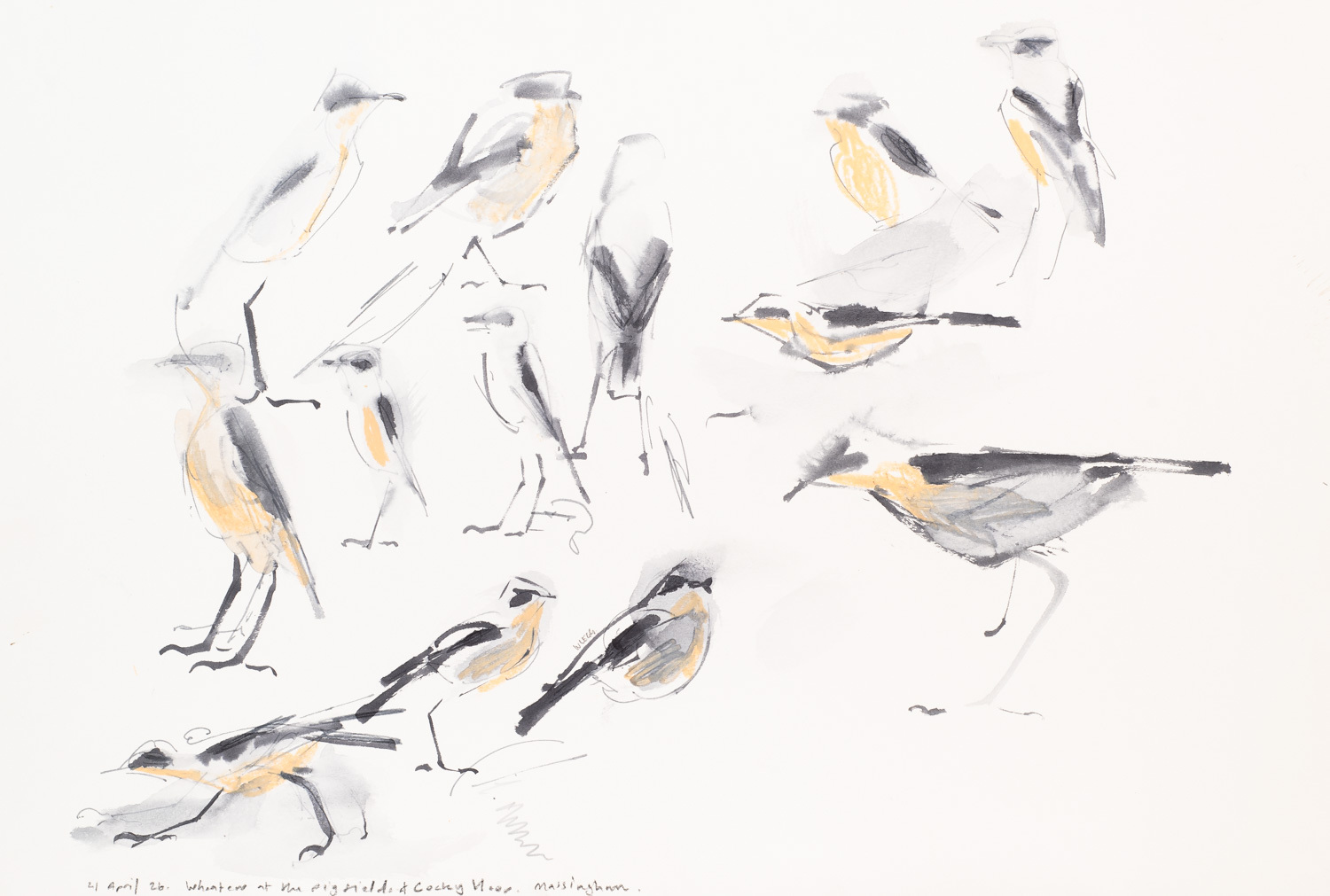
Briefings over and everyone was keen to get out onto the heath or to explore some less familiar areas near to our new base. The chat group was soon buzzing with messages and many were drawn to the five wheatears that had been found on the cattle grazed area of the heath. Several artists sketched this smart group of birds, feeding and perching on their molehill vantage points as well as flying to and from a water trough that helped to hold them in this area.
During the evening one of the local Little Owls was seen and this became a popular subject over the week. On the second morning Darren Woodhead set off to be at a site known for woodlark at dawn but when he returned for a late breakfast he’d had to make do with a pair of goshawks displaying over the open heath, an experience he duly recorded in a beautifully atmospheric painting. This became a pattern for the week and the woodlarks eluded almost everyone until late on the very final day when most artists had already left. Now of course they are back to allowing themselves to be both heard and seen! Migrants continued to be seen, Dafila Scott finding a ring ouzel that stayed for several days and Chris Wallbank a fine male whinchat.
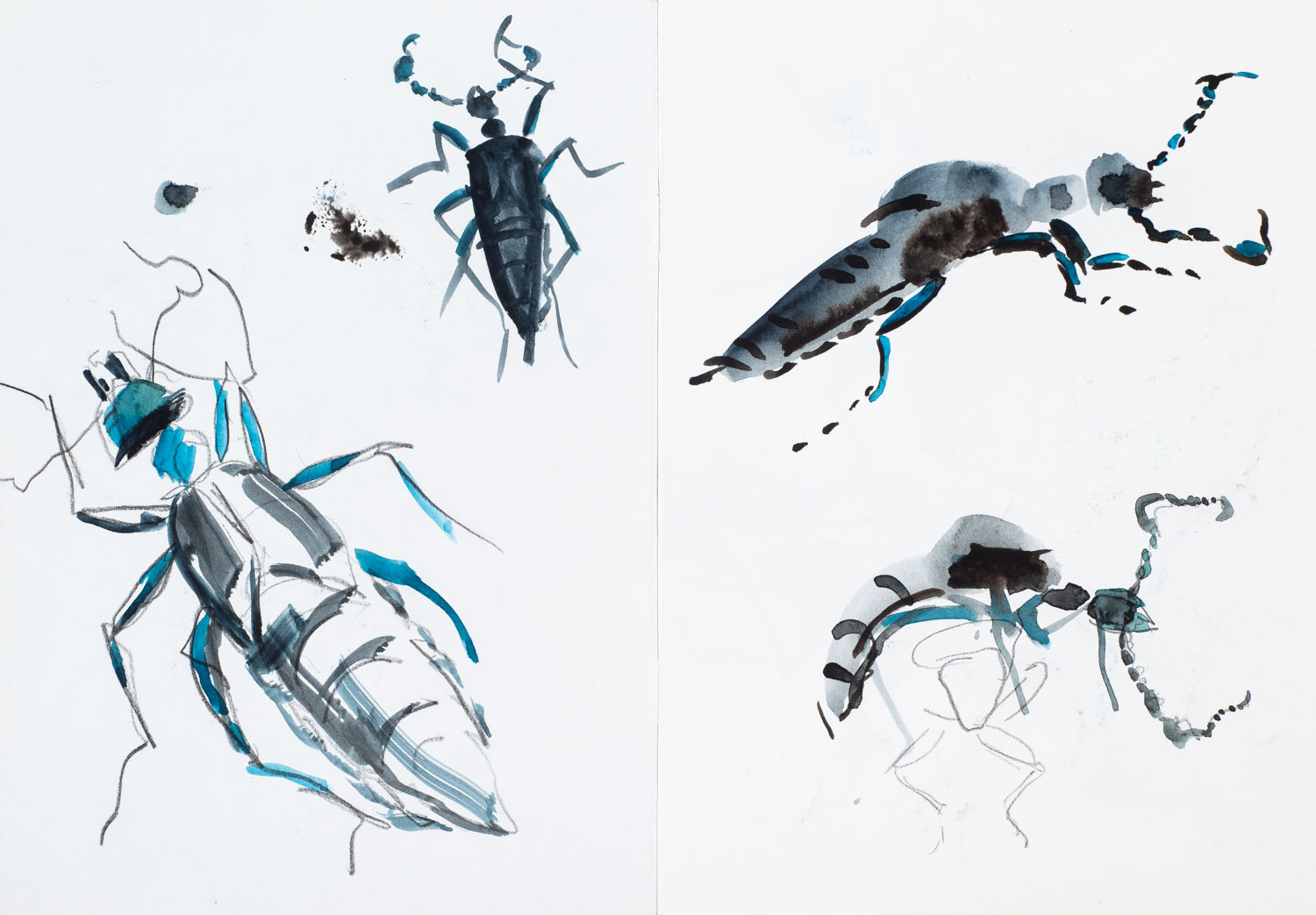
Birds inevitably figure strongly but Adele Pound was out to champion the insect tribe and spent many hours in the close study of black oil beetles, green tiger beetles, solitary bees and pond creatures amongst others.
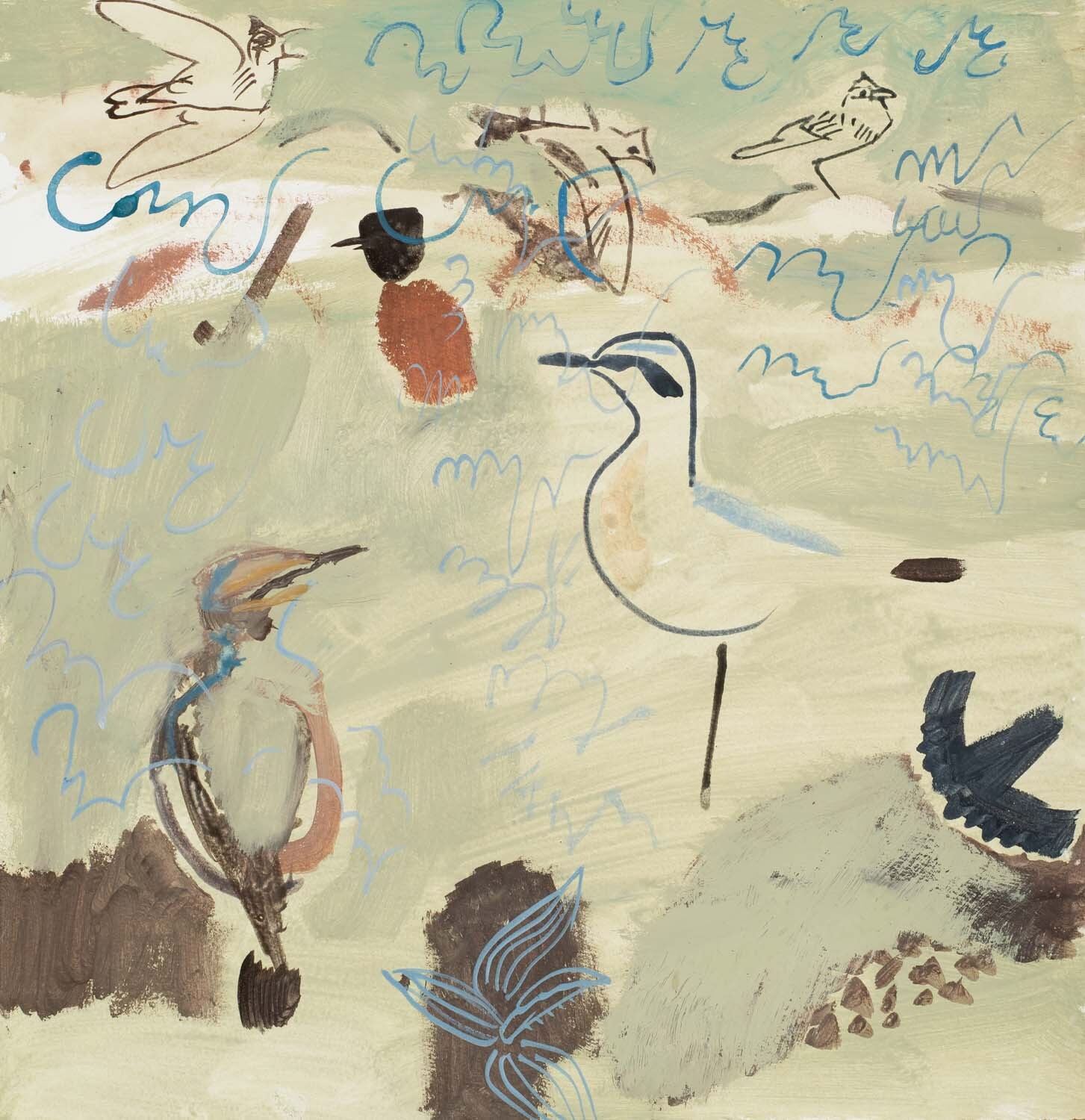
Kim Atkinson embraced the idea of incorporating sound into her work and made marks within her field paintings to represent the sounds she heard. They can be seen here in her study of wheatears, stonechat and skylarks and also in the detail from a narrow vertical painting depicting a hedgerow beside Barn Breck.
During the residency we welcomed Martha Kearney to record a programme for BBC Radio 4’s Open Country and this will be first broadcast on 7th and 9th May, then on BBC Sounds. Kim is a featured artist in the programme and discusses this painting with Martha. She explains how what “Looks at first sight an unremarkable hedgerow was noisy with lesser whitethroats, whitethroats, blackcaps, long tailed tits, robins and chiffchaff, with yellowhammer and yaffle along at the corner and skylarks overhead. One of the good reasons for painting something is that you are free to put in what you feel to be important and not only things you see. I began work at the top of a tall piece of paper with blue songs of skylark and pink arabesques of chaffinch and the rapid series of mmm are lesser whitethroat. Along the hedge bottom were cowslips and ground ivy with bee flies hovering and probing the flowers. The painting also has motifs showing the teacher-teacher calls of a great tit. Arriving at the bottom of the painting, among the plants along the tractor flattened turf and bare soil were mining bees and the nomad bees which parasitise them.”
On another day we hosted 9 visitors with representatives of Natural England and Defra that prompted this press release:
https://www.gov.uk/government/…
There were also officers from Norfolk County Council and the most local Landscape Recovery project of which the estate is part. This was initiated by Sarah Davies who is Principal for Local Nature Recovery Delivery at Natural England. Sarah began her career on the FBA staff at Mall Galleries and so is an enthusiastic supporter of SWLA with a good understanding of its ethos and working. Their purpose was to explore how artistic interpretation of the natural world can be used to raise awareness of biodiversity, local landscapes and nature recovery strategies. Olly Birkbeck led a tour of the heath and farm, they met artists along the way and were most impressed by what they saw, not least by a ring ouzel!
Birds and insects may have taken centre stage but subjects ranging from plants to grazing animals, pigs, common lizard, toad tadpoles, moth trap catches, landscapes and farming activity were all documented during the course of the week. Using mixed media Nik Pollard made a series of beautiful drawings of cowslips that are found all across the calcareous parts of the heath. He used bold marks in wax pastels which picked up textures from the board beneath his paper and sometimes a watercolour wash as a base.
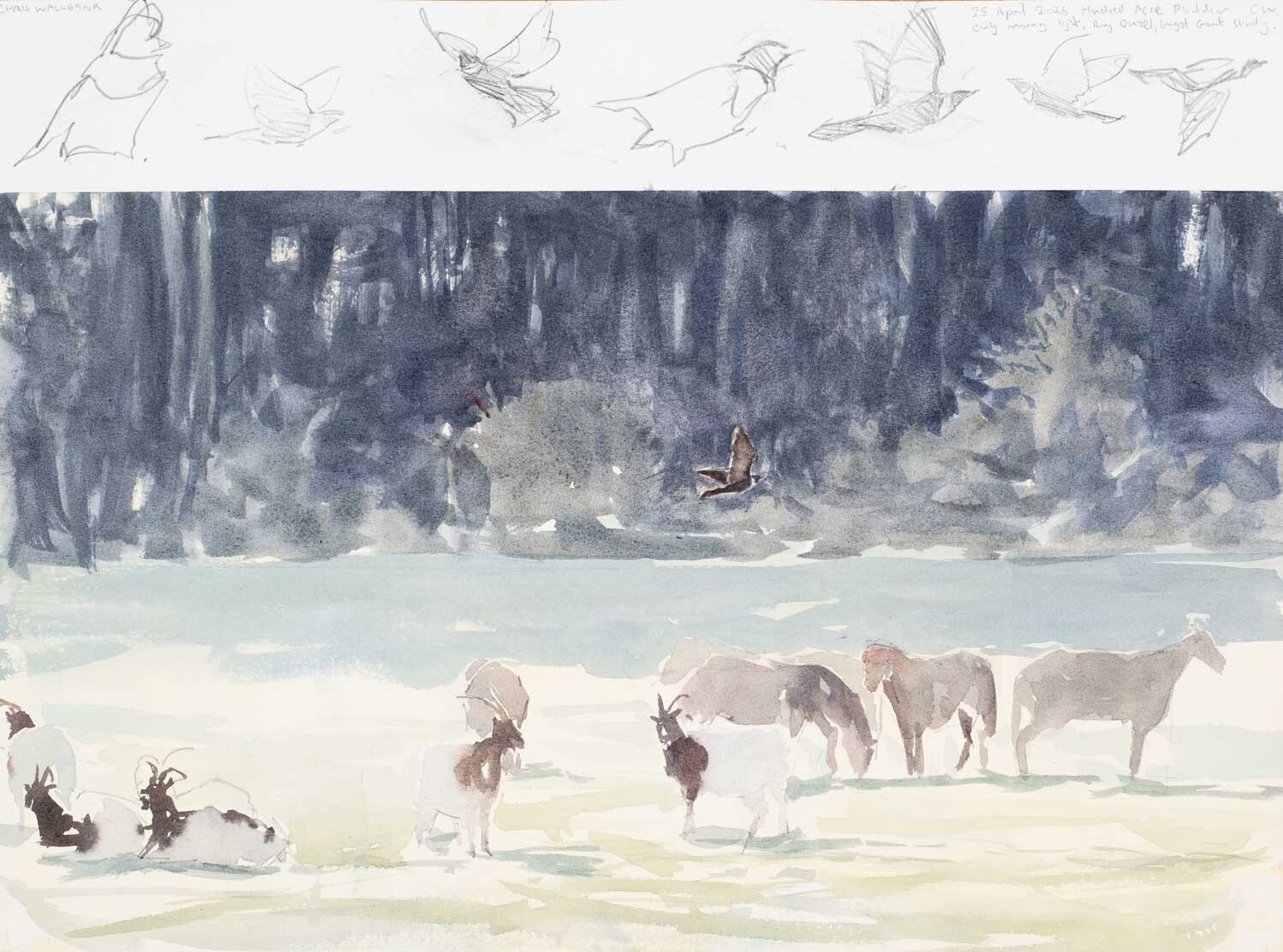
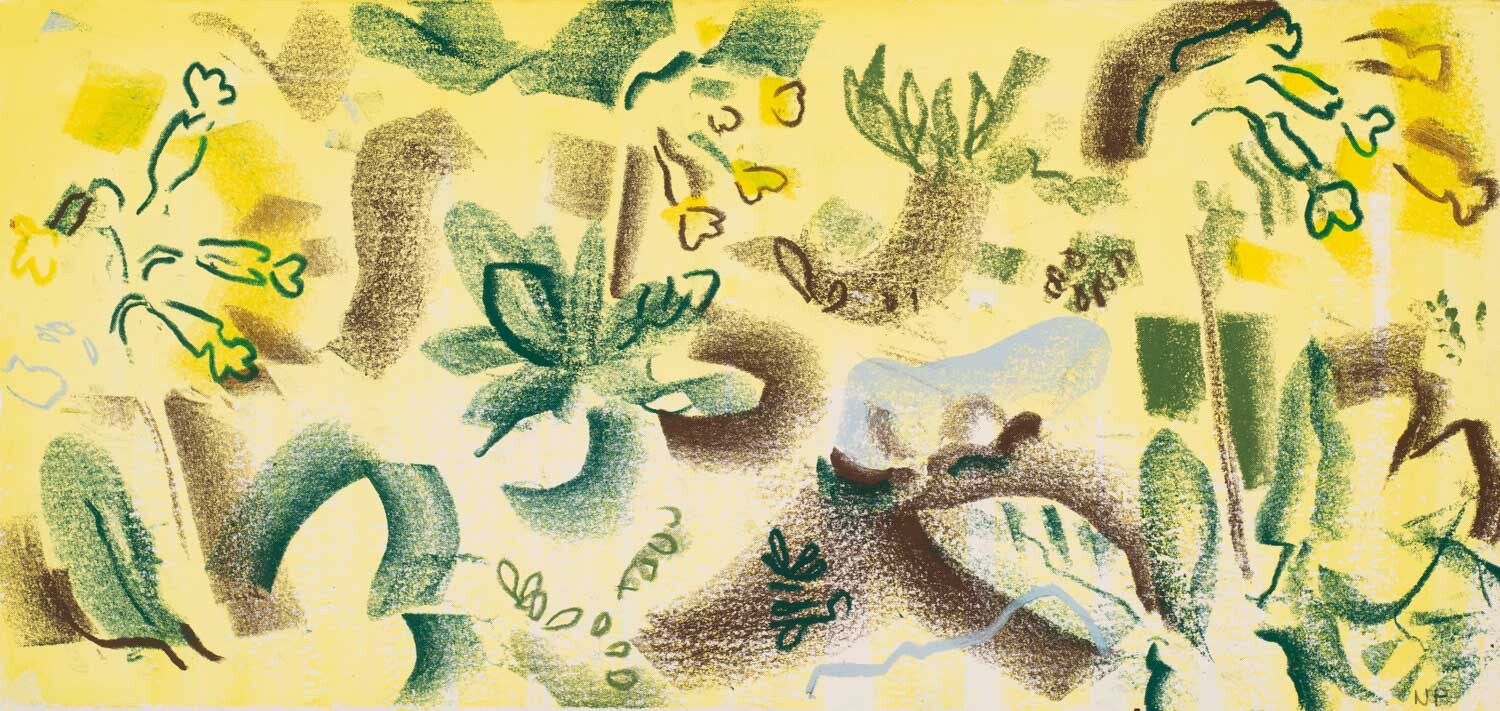
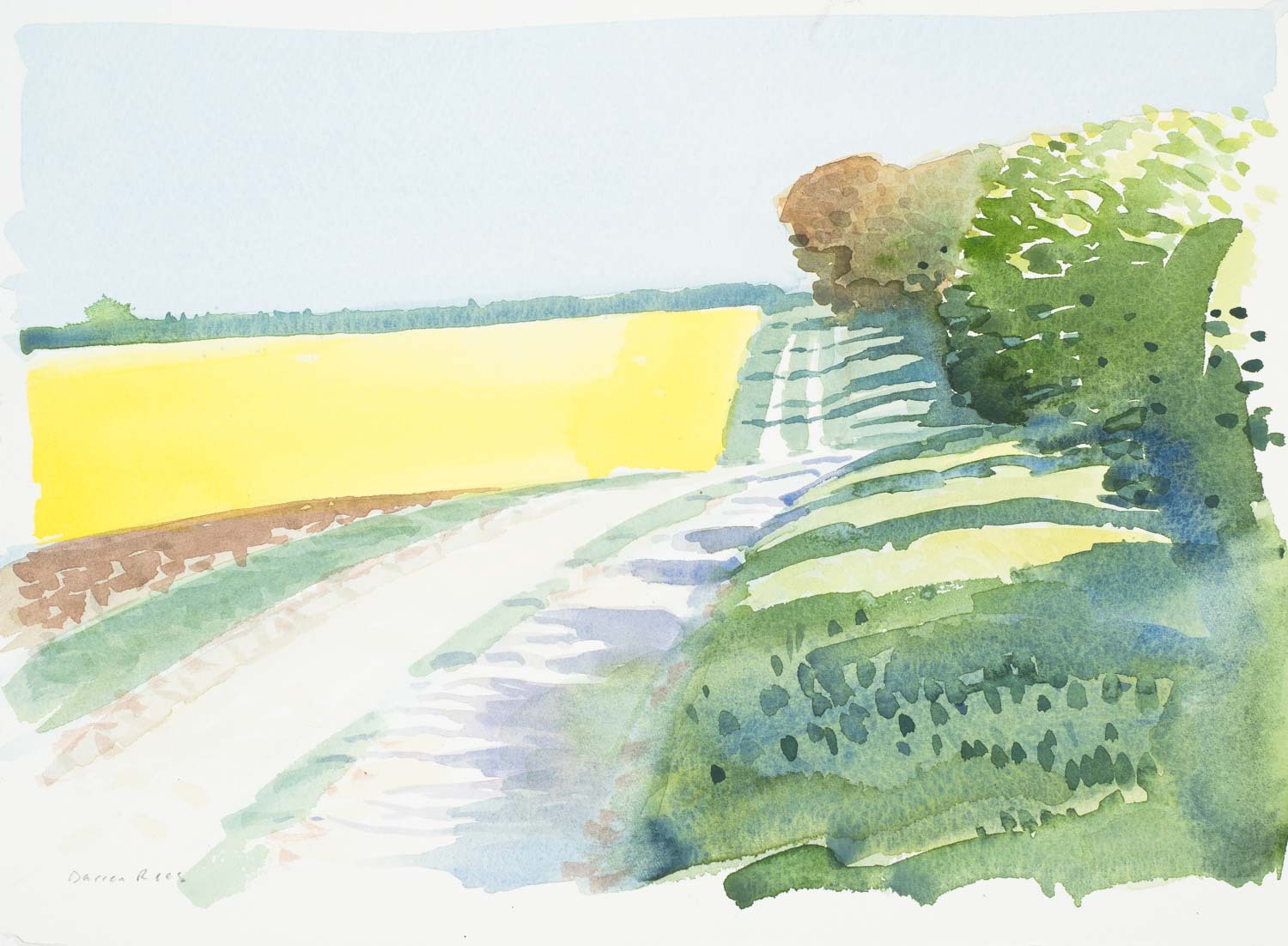
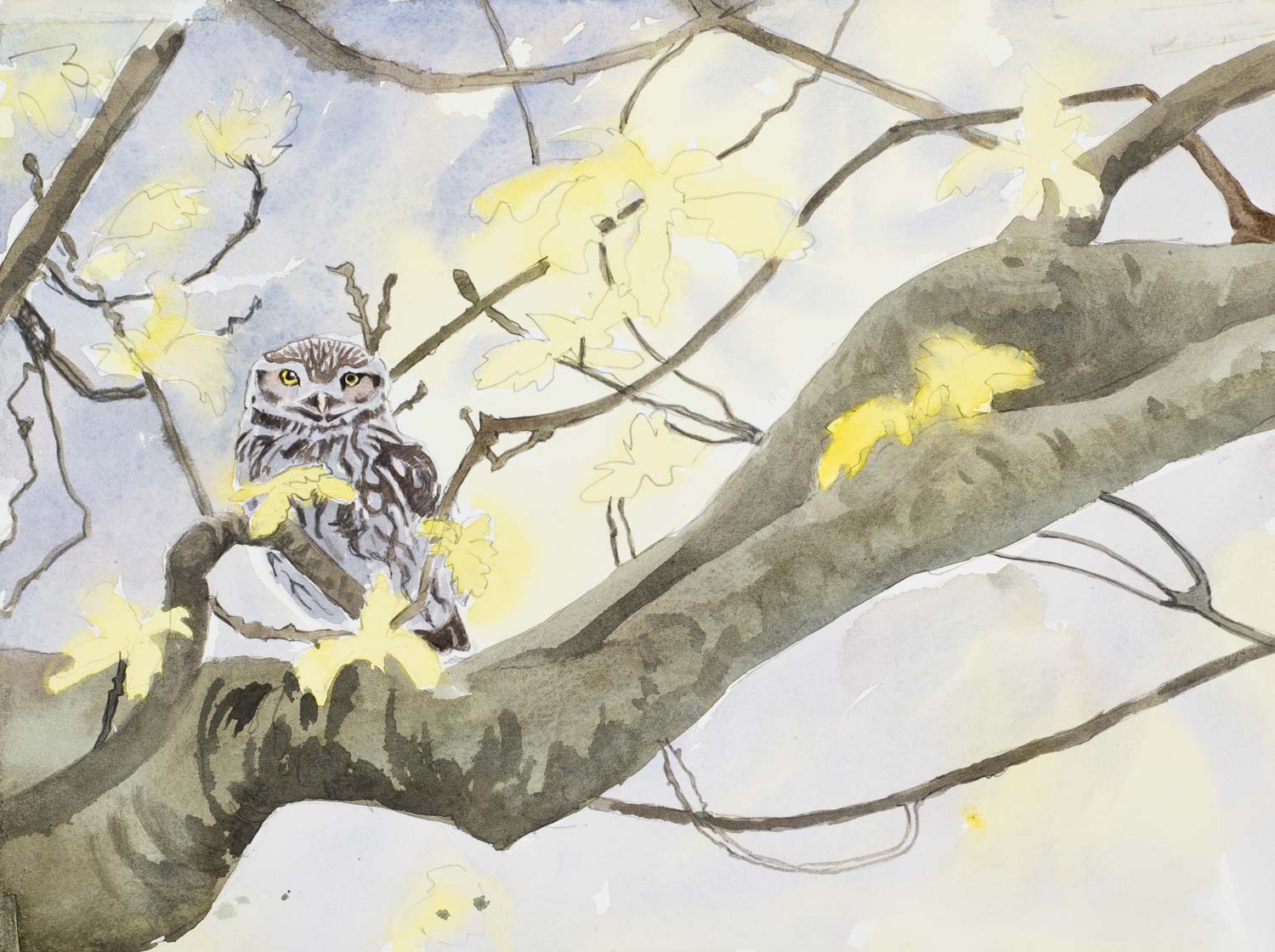
Work by Chris Wallbank, Nik Pollard, Darren Rees and Paul Henery (click on detail for full image)
Throughout the residencies and smaller scale visits to the heath, frequent feedback from artists has been that having comfortable accommodation and being well catered for has enabled them to give of their best. The manner in which estate owner Olly has embraced the project, become an integral part of the team and established a rapport with everyone has been key to what we have achieved. Similarly, the friendship that has developed between the artists and the volunteers in Massingham has been one of the joys of this project, enabling its success to date to far exceed the expectations we had when we started. Nick Acheson too has been hugely committed to the cause and we can’t wait to share the beautiful narratives that he has created to accompany the visual art in the book. Later this month we look forward to welcoming SWLA Friend James Holden, the major sponsor of the book, as he spends a few days immersing himself in the estate. Our initial year of observation will then be over as we turn to an intensive period of work on the book and plans for exhibitions next year.
Thinking of exhibitions, it has been very encouraging to see the level of interest generated when selections of artworks have been shown, both locally in Great Massingham, and in the Out of the Frame Room at the Natural Eye. We are most grateful to those who have supported the project by purchasing artworks and hope that they will be enjoyed for many years to come.
Tim Baldwin and Harriet Mead